How many porta potties do I need?
Start with your headcount and the job length, then check it against how many porta potties you actually need for the math. OSHA 1926.51(c) sets the baseline for construction crews: one toilet seat for 20 workers or fewer, then one seat and one urinal per 40 workers once you pass that mark, scaling down to one per 50 at 200-plus workers. Events run differently. ANSI/PSAI Z4.3 treats one unit per 10 guests over a 40 hour week as the standard service interval, which is why a wedding or a block party in West Jordan needs more units per head than a jobsite does. If anyone on site uses a wheelchair, ADA accessible units come into play under ADA Standards 213.2, which requires at least 5 percent of clustered units to be accessible, and never fewer than one. Compare a standard unit against a deluxe flushable model before you commit, since bigger crews or longer events often justify the upgrade.
What does a unit need for delivery access?
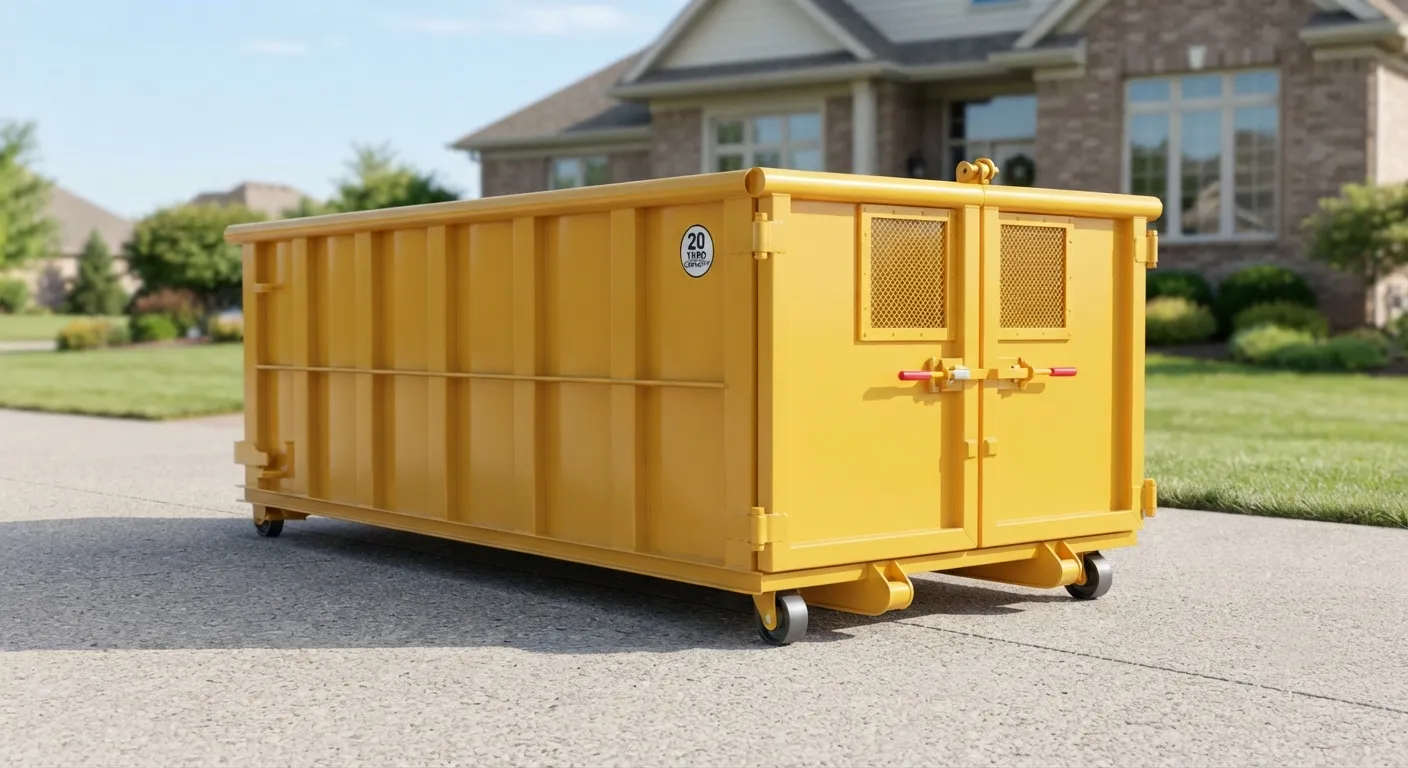
A roll-off dumpster delivery needs roughly 60 feet of straight clearance behind the truck, and porta potty trucks need similar room to maneuver on tight residential lots. Walk your site and note anything overhead. A standard unit measures about 44 by 48 inches on the ground and stands 92 inches tall, so gates, fence lines and low branches all matter. If you're placing units near a curb or sidewalk, check the placement guide for spacing rules, and confirm whether the spot sits in the public right of way, because that placement needs confirming with the West Jordan city offices directly rather than guessed at. ADA units need more room still: ADA Standards 304.3.1 calls for a 60 inch turning circle, and the door opening itself needs a minimum of 32 inches clear under ADA Standards 404.2.3. Ground should be firm and level, matching ADA Standards 302.1 for stable, slip-resistant surfaces, which also just makes sense for any unit, accessible or not.
What paperwork or permits do I need before delivery?
Most residential jobs in West Jordan need nothing more than a signed quote and a delivery address. Larger jobs, especially ones placing a unit on a street, sidewalk or public easement, may need a permit from the city. This is a case where the answer isn't fixed, since permit rules vary by parcel and by how long the unit stays. Confirm with West Jordan's permitting office before delivery day rather than assuming, and check the permit requirements page for what to ask. Dumpster placement carries its own separate permit question too, covered on the dumpster permit page. If you're running a fenced perimeter alongside your restrooms, temporary fencing sometimes falls under the same review, so ask about both at once and save yourself a second call. Construction sites bundling several services together should look at construction site services as a package rather than booking each piece separately.
When should service and pickup be scheduled?
Book your first service around the ANSI/PSAI Z4.3 baseline of once weekly for light use, then increase frequency for events or crews over 10 people per unit. Check how often porta potties get cleaned for what a service visit actually includes. Schedule pickup for the day after your event ends, not the same day, since breakdown and cleanup always run long. If you're renting for a stretch of months rather than a weekend, look at the monthly rental page for how billing works over a longer term, and compare it against daily rates if your timeline is still moving. Winter jobs in West Jordan need a separate conversation about servicing, since freezing temperatures change how tanks are handled; that's covered on the porta potty in winter page. Handwashing stations need their own schedule too. 29 CFR 1910.141(d)(2) requires soap and towels or a hand-drying device, not sanitizer alone, so factor restocking into your service plan.
| unit | day | week | month |
|---|---|---|---|
| standard | 100-350 | 130-500 | 125-325 |
| ada | 200-400 | 120-240 | n/a |
| deluxe | 85-1200 | 150-290 | n/a |
Weekend rentals run separately from the table above. A standard unit for a weekend typically falls between 125 and 400 dollars, so check that rate directly if your job is Friday through Sunday only. For full cost breakdowns by scenario, the rental cost page walks through what changes the price.
Frequently asked questions
What is included in a standard porta potty rental?
A standard unit includes the toilet itself, a 60 to 70 gallon holding tank, and one scheduled service visit under the ANSI/PSAI Z4.3 baseline. Delivery and pickup are typically quoted separately as a delivery fee. Ask whether your quote bundles service visits or bills them per trip.
Do I need a handwashing station with my porta potty order?
Not always, but OSHA 1926.51(a)(1) requires potable water at all workplaces, and 1926.51(f)(1) specifically requires washing facilities where workers apply paints, coatings, herbicides or insecticides. A handwashing station covers both needs cleanly.
How far in advance should I book in West Jordan?
Five to seven business days covers most standard orders. Events, ADA units, and anything needing a permit review should book two to three weeks out. Same-day needs still get handled through emergency porta potty rental, just expect a higher delivery fee.
Can I place a unit on the street in front of my house?
Sometimes, but it depends on the parcel and the city's right-of-way rules, which aren't fixed across every West Jordan address. Confirm with the city before delivery. West Jordan Porta Pros can advise on placement but can't approve street permits on your behalf.
What is the difference between a standard and deluxe unit?
A deluxe unit adds features like a flushing mechanism and a nicer interior, useful for weddings or multi-day events where comfort matters more. A standard unit covers construction and short jobs fine. Compare both before booking through West Jordan Porta Pros.
Next step
Get a delivery date
Tell us the address, the dates and the headcount. We size the order and confirm the route.